
Solitaire Dreams
Orchid GamesCard
4.41.38K Reviews
- Version
- 4.35.0
- Installs
- 500.00K
- Age Rating
- Everyone
Screenshots


Our Review of Solitaire Dreams
 Analysis by Appyee
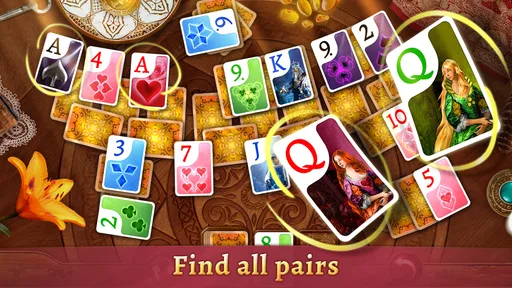
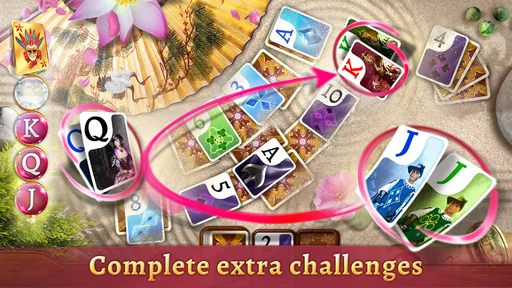
I reach for Solitaire Dreams when I want a quiet card game that asks for attention without demanding a long, complicated session. It is a mahjong solitaire game from Orchid Games, built around matching pairs of cards and clearing layouts. That sounds simple, and the basic rule is simple, but the appeal comes from deciding which pair to remove next, spotting blocked possibilities, and avoiding a move that leaves the board awkwardly arranged.
My first impression is that this is best understood as a relaxed puzzle game rather than a traditional competitive card game. There is no need to learn a large rulebook before playing. You look at the layout, find matching available cards, and work toward clearing it. That makes it approachable for someone who wants a casual brain-training habit, while the changing arrangements give the familiar matching mechanic enough variety to remain engaging.
How I judge whether this game is worth keeping
For this kind of game, I look at four things before recommending it: how quickly a round begins, whether the puzzle requires real thought, how comfortable it feels during repeated play, and whether its progression gets in the way of the card game. Solitaire Dreams performs well on the first two points. It is easy to start, and the decisions become more interesting once several possible matches compete for attention.
The most important skill is not simply finding any matching pair. I try to consider what each removal will expose and which cards may become inaccessible if I choose the wrong order. That small layer of planning separates it from a basic matching toy. A good move can open several future choices; a careless one can leave a useful card buried behind an inconvenient sequence.
I also judge whether the game suits the time I actually have. This is a good fit for short breaks, waiting rooms, or a few minutes before bed because the central action is immediately understandable. It does not require the concentration of a strategy campaign, but it is more mentally involving than endlessly scrolling through a social feed. The result is a useful middle ground for players who want something calm but not completely passive.
The game is free to download, which lowers the barrier to trying it. Optional purchases range from $0.99 to $99.99 per item, so I would still advise checking the purchase flow carefully if children use the device or if you prefer a completely uninterrupted free experience. The free entry point is helpful, but the presence of optional purchases means the overall experience should be judged by how comfortable you are with that model, not only by the download price.
It is suitable for Everyone, and I can see why. The presentation and rules are accessible, and the game does not depend on an elaborate story or mature subject matter. That makes it a reasonable choice for a shared family tablet, although younger players may still need guidance around optional purchases and around the patience required to plan instead of tapping quickly.
The matching loop is simple, but the order matters
In practice, I play each layout by scanning for pairs that are currently available, then checking what those removals might reveal. I avoid treating the first visible match as automatically correct. If one pair opens a central area while another only clears a card from the edge, the central move may create more useful options. This is one of the most valuable habits to develop because it turns the game from reflexive tapping into a small planning exercise.
A second useful habit is to pause after every important removal. The board can change enough that a previously hidden match becomes obvious, while a hurried player may continue looking only at the cards they noticed before the layout changed. I find that this pause also makes the game feel less stressful. It encourages observation rather than speed, which is exactly why I prefer it for winding down.
When I am playing during a short break, I do not try to solve every layout with perfect efficiency. I use the session as a reset: scan, make a deliberate pair, reassess, and continue. When I have more time, I pay closer attention to the order of exposed cards. The same basic game therefore supports two moods: casual clearing and more careful puzzle solving.
Why the brain-training angle works for me
I would not treat the game as a formal cognitive program, but it does encourage several useful behaviors: visual scanning, short-term recall, pattern recognition, and planning ahead. The challenge is gentle enough that I can play without feeling tested, yet I still notice when I am rushing or missing a pair that was visible a moment earlier.
The strongest mental benefit comes from resisting the urge to remove the easiest pair immediately. I have found that comparing two or three possible moves is more satisfying than simply clearing whatever stands out first. That makes the game a better fit for someone who wants a light puzzle with a calm pace than for someone seeking a fast arcade reaction test.
There is also a practical advantage for mixed-age households: the rules can be explained in a sentence, but a more experienced player can still demonstrate better sequencing. A child may focus on matching pictures or symbols, while an adult may focus on preserving access to future cards. Both players can understand the same board at different levels.
Where Solitaire Dreams wins, and where another category may fit better
The clearest strength is accessibility. A traditional solitaire app may ask you to understand suits, ranks, foundations, and tableau rules. A more competitive card game may introduce timers, opponents, decks, or complex abilities. Here, the matching objective is much easier to grasp. I can hand the device to someone unfamiliar with mobile games and explain the basic idea without turning the first session into a tutorial.
It also wins when I want a game that feels orderly. The board gives me a defined task, and each successful match provides visible progress. That is more satisfying than an endless game with no clear stopping point. I can finish a session after a layout or a natural pause instead of feeling pulled into a never-ending feed of content.
Compared with classic solitaire, this game is less about managing a formal card system and more about visual awareness and move order. If you enjoy arranging cards by rank and suit, a conventional solitaire app may offer deeper rule-based decision making. If you prefer recognizing pairs and opening a layered layout, Solitaire Dreams is likely the more comfortable choice.
Compared with match-three puzzle games, it is slower and less animated in spirit. There is no need to chase a quick chain of combinations or react to a board that changes at high speed. I would choose this game for quiet focus; I would choose a match-three title when I wanted stronger momentum, more immediate feedback, or a more energetic session.
Compared with online card games, it is better suited to solitary play. You are not depending on another person’s turn, a matchmaking pool, or a competitive ranking to make the session worthwhile. That is a real advantage when I have unreliable connectivity or simply do not want the pressure of playing against someone. On the other hand, players who need social competition may find the experience too self-contained.
It is also worth separating this game from dedicated brain-training apps. Those apps usually organize exercises around specific mental skills and may present progress in a more structured way. Solitaire Dreams gives me a game first and a light mental workout second. I prefer that balance when entertainment matters more than measurement, but someone looking for a systematic training routine may be better served elsewhere.
The small frictions I notice during longer sessions
The same simplicity that makes the game welcoming can limit its appeal for players who want substantial variety in rules. Matching pairs remains the center of the experience, so anyone who becomes bored with that loop will not find relief through a completely different card system. I would not install it expecting a full collection of unrelated games.
Long sessions can also make the visual search feel repetitive. I enjoy the first few layouts more than a prolonged stretch in which I am repeatedly scanning similar kinds of cards. My solution is to use it in short sessions rather than treating it as a game I must play continuously. That matches its relaxed design better and keeps the basic loop from becoming a chore.
Optional purchases are another point to consider. The game is free, but the listed purchase range extends from small amounts to $99.99 per item. I would not assume that every player will want to spend money, and I would set device-level purchase controls before letting a child explore independently. For adults, the sensible approach is to play the free version first and decide whether any paid convenience genuinely improves the experience.
Device compatibility is reasonably broad: the current version is 4.35.0 and requires Android 5.1 or later. That makes it accessible on many older Android devices, although the actual comfort of play will still depend on screen size and general device responsiveness. A larger display makes scanning pairs easier, while a small phone screen may encourage more zooming or closer attention during dense layouts.
The game has been available since February 17, 2016, and its continued presence suggests that its basic format has lasting appeal. I would interpret that as reassurance about its established identity, not as a promise that it will satisfy every modern gaming preference. Players who want the newest visual effects or a constantly changing competitive environment may prefer a newer style of card title.
What switching from another card game really involves
If you are coming from classic solitaire, the main adjustment is replacing rank-and-suit planning with pair recognition and access management. You will not need to memorize a new collection of complicated rules, but you will need to think about the order in which cards are removed. I found that transition easy because the goal is immediately visible, though players who love traditional solitaire’s structured foundations may miss that specific kind of organization.
If you are moving from a competitive card game, the bigger change is the absence of pressure from another player. There is no opponent forcing you to react to a changing strategy, so the challenge comes from the layout itself and from your own decisions. That can feel wonderfully peaceful, but it may also seem too quiet if your enjoyment depends on bluffing, timing, or direct competition.
Switching from a fast puzzle game requires a different adjustment again. I recommend slowing down rather than tapping at the pace you used before. The best way to test the fit is to play several short sessions and notice whether you enjoy examining the board. If you keep wishing for quicker animations, timed goals, or stronger rewards, this may not be the right category for you.
One practical tip is to avoid judging the game after only a few seconds. The opening matches are intentionally easy to understand, while the more interesting decisions appear when several pairs are available and the order starts to matter. I would give it enough time to reach that planning stage before deciding whether the gameplay has enough depth for you.
Who should install it, and who should skip it
I recommend it to casual players who like visual puzzles, adults looking for a low-pressure way to occupy a short break, and families wanting a card game with an approachable rule set. It is especially suitable if you like games that can be paused mentally between moves instead of demanding constant attention. The free starting point also makes it easy to test without committing immediately.
I would be more cautious about recommending it to players who need multiplayer interaction, a strong story, or a broad collection of card variants. It is not the first choice for someone seeking a competitive ladder, a traditional casino-style experience, or a fast reaction challenge. Those players may be happier with a dedicated online card game, a classic solitaire collection, or a more energetic puzzle title.
For a realistic everyday example, imagine having ten minutes before an appointment. A traditional strategy game may take too long to settle into, while a competitive match may be difficult to leave at the right moment. This game gives you a clear visual task: open the board, make a few considered matches, and stop when your time is up. That predictable rhythm is where I find its greatest practical value.
Families should also decide who controls purchases before sharing the game. The Everyone rating makes the content broadly accessible, but age suitability and spending suitability are not the same thing. I would let a child play with purchase restrictions enabled and encourage them to focus on the matching challenge rather than treating optional items as necessary progress.
My recommendation after using it
Solitaire Dreams is worth trying if you want a calm, accessible matching-card puzzle rather than a competitive card battle. Its strongest qualities are the quick learning curve, the satisfying process of opening a layout, and the modest amount of planning hidden inside a very simple rule. I like that it gives me something to think about without making a short break feel like a serious commitment.
The audience response is encouraging: it holds a 4.4 average from around 14 thousand ratings, with roughly 1.4 thousand written reviews and more than 500 thousand installs. Those figures do not replace personal taste, but they fit my experience of a game with a clear, approachable premise that has found a steady audience.
I would start with the free version, play in short sessions, and pay attention to whether the move order stays interesting after the novelty fades. If you enjoy comparing possible matches and uncovering the board gradually, it has enough character to become a dependable casual game. If you want competition, elaborate card rules, or constant novelty, choose an alternative from those categories instead.
For me, the final decision is straightforward: keep it installed when the goal is quiet concentration, and skip it when I am looking for a social or high-energy game. Orchid Games has focused this title on a narrow idea and made that idea easy to pick up. That focus is both its main strength and its main limitation, but for the right player, it makes a few spare minutes feel pleasantly well spent.
Verdict
Strengths of Solitaire Dreams
- Relaxing solitaire gameplay suitable for short or extended sessions.
- Bright visuals and gentle animations make the game pleasant to play.
- Simple controls are accessible for both new and experienced players.
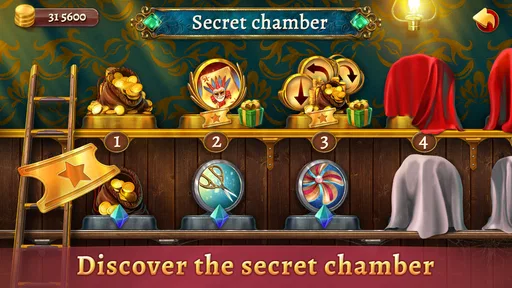
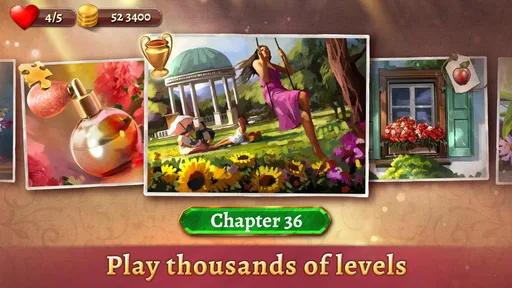
- Progression and rewards add motivation beyond completing individual deals.
- Works well as a casual game for offline entertainment.
Limitations of Solitaire Dreams
- Frequent ads may interrupt play, especially between completed levels.
- Some rewards or features may encourage optional in-app purchases.
- Difficulty can feel inconsistent across certain solitaire challenges.
- Limited variety may make the core gameplay repetitive over time.
- Battery use can increase during longer sessions with animations enabled.
Similar Picks in This Category
View All
Solitaire - Classic Card Games
MobilityWare4.6

UNO!™
Mattel163 Limited4.3

Spider Solitaire: Card Games
MobilityWare4.6

Solitaire.com - Classic Cards
Tripledot Studios Limited4.7

Plants vs. Zombies™ Heroes
ELECTRONIC ARTS4.1

Hearthstone
Blizzard Entertainment, Inc.4.1
Frequently Asked Questions
What is Solitaire Dreams, and how is the game played?
Solitaire Dreams is a casual card game built around classic solitaire-style gameplay, combined with a relaxing dream-themed setting. You generally arrange cards according to familiar solitaire rules while progressing through levels, unlocking visual elements, and completing objectives. The game is designed for short sessions, making it suitable for players who want a simple but engaging puzzle experience rather than a competitive multiplayer card game.
Is Solitaire Dreams free to download and play?
Solitaire Dreams can usually be downloaded and played without an upfront purchase, but the free version may include advertising, optional in-app purchases, or both. Purchases can provide items such as extra hints, additional lives, currency, or cosmetic content, depending on the version available on your device. You should review the store listing and configure purchase restrictions if children may use the device.
Does Solitaire Dreams require an internet connection?
The basic solitaire levels may be playable without a constant internet connection, which is convenient when traveling or using the game in areas with limited coverage. However, some features may depend on online access, including advertisements, cloud synchronization, events, rewards, updates, and in-app purchases. Availability can vary by platform and version, so it is best to test offline play after installation.
Is Solitaire Dreams suitable for beginners and casual players?
Yes, Solitaire Dreams is generally approachable for beginners because it uses familiar card mechanics and presents progression gradually. Players who already know classic solitaire should understand the main rules quickly, while newcomers can learn through the early levels and available hints. The relaxed presentation makes it a good choice for casual play, although later stages may introduce more demanding layouts or objectives.
What should I know about ads, purchases, and privacy before installing Solitaire Dreams?
Before installing Solitaire Dreams, check the current Google Play or App Store listing for its advertising, purchase, data-safety, and privacy details. Free mobile games may collect limited technical or usage information and may display personalized or non-personalized ads, depending on regional settings and permissions. If you prefer uninterrupted play, remember that optional purchases may be offered, but they are not normally required to begin playing.
Play our best games!


